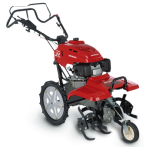
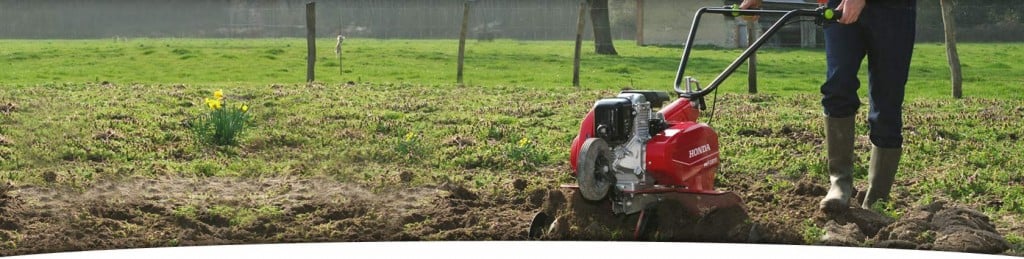
Tillers, cultivator and rotavators are an essential part of a gardener’s arsenal in the preparation of the soil ready for the up and coming spring months. A tiller, also known as a cultivator or rotavator, is a tool that uses a set of blades to break up soil. Tilling is one of the best ways to create healthy soil in a flower bed, as it mixes and loosens the soil, which promotes healthy drainage and irrigation. In addition, tilling lets gardeners mix nutrients and amendments directly into the ground. Tillers can save you hours of labour by crumbling clumps of compacted dirt for when you are ready to start planting.
 Whether you are a dedicated gardener or or a seasoned professional, there will a tiller, cultivator or rotavator out there to suit you. The smaller hand held tillers or mini-tillers are lightweight and easy to use and are ideal for turning over small flower beds and vegetable plots. One of our most popular mini tillers is the Honda FG110 mini tiller. It is a compact and efficient and lightweight multi-purpose personal garden tool. With the controls at your fingertips, integrated folding handles and lightweight design, it is easy to use, transport and store. The larger allotment tillers and rotavators are designed to break up densely packed earth and lawns, feature forward and reverse drive, have clockwise and anticlockwise rotating tines and some allow you to fit an extensive range of attachments to get the most from these heavy duty cultivators.
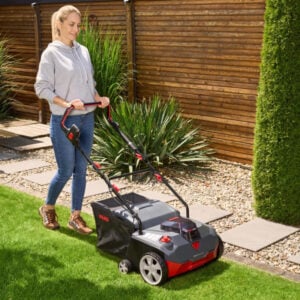
Some cultivators can be equipped with dethatching tines or rotary brushes. These attachments can be useful, but may not work as well as separate machines. You have to decide whether this capability will be useful for you.
Using garden tillers, cultivators or rotavators:
- Take a walk through the area where you plan to use your garden tiller. Remove any weeds with a hand trowel or shovel, and discard with the yard waste. Tillers will simply chop up the weeds as well as the rhizomes (underground runner-type roots) and make a multitude of weeds that you’ll need to battle in the future.
- Begin at the front corner of the garden. Turn the tiller on, and slowly move forward as the blades dig into the earth with a chopping motion. Avoid any nearby plants by a wide berth (2 feet or more) to prevent damage to spreading roots. Also stay about 1 to 2 feet away from the edge of the garden bed to prevent dumping dirt onto any grass areas.
- Don’t till when the soil is too wet. Working soil that is too wet results in soil compaction. If a ball of soil sticks together when dropped, it’s too wet. Use lots of mulch and organic matter to improve soil tilth. Mulch also reduces weeds, which further reduces the need to cultivate. For best effect till the area once before adding this.
An experienced specialized garden retailer such as Calgary Direct offer an excellent pre-sales service and it is always advised to seek that extra bit of help before purchasing.