Todays post includes advice and tips about mowing your lawn. It contains important and useful tips concerning mower maintenance, mowing patterns, lawn mower operation and mower safety.
Keep the Mower Blade Sharp
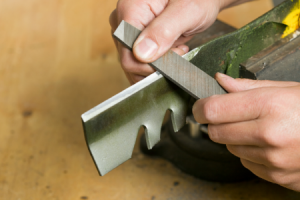 A sharp blade is absolutely critical to a quality mowing job. Dull blades beat and tear the grass leaving frayed leaf tips which give a whitish cast to the lawn. A sharp blade cuts cleanly and easily, requiring less fuel. Sharp blades are especially important for tough-bladed grasses such as zoysiagrass, ryegrass and tall fescue. Inspect the blade after each mowing checking for sharpness and for the presence of nicks. The frequency with which the blade must be sharpened is obviously affected by the amount of mowing you do, but also by the grass species and by the presence of debris (e.g., rocks, sticks, etc.) in the lawn. It is a good idea to have an extra sharp blade on hand.
Mowing Pattern
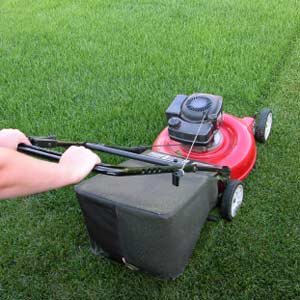 It is a good idea to alternate mowing direction from one mowing to the next so that soil compaction and wear from the mower wheels will be more uniformly distributed over the lawn. Grass blades also tend to lean in the direction of mowing; this can be prevented by mowing in different directions. Establish several mowing patterns that result in as few turns as possible. This not only speeds up mowing time, but reduces damage to the turf from the turning mower wheels.
Mower Operation
Operate the mower at a safe speed (3 to 5 mph). This will cut the grass cleanly and thoroughly. Excessive speed leads to a poor cut. Slow down when making sharp turns to avoid damage to the turf. Make wide, gradual turns when possible. Keep the mower properly adjusted and watch for loose or broken parts. Check the engine oil level each time you mow. Change the oil and grease wheels, bearings, chains and shafts according to manufacturer’s recommendations. Air cleaners need frequent cleaning, especially when mowing in dusty conditions. Become thoroughly familiar with your mower by studying the operator’s manual. Clean dirt and grass from the mower housing immediately after mowing or it will become dry and hard to remove—a putty knife is handy for this purpose. Also, wash off the mower, but do not get water on a hot engine.
Be Careful When Mowing Around Trees
Bumping young and thin-barked trees with a lawnmower causes serious injury, especially if the tree is young or has thin bark. What seems like only a minor bruise can later enlarge into a deep wound
Safety
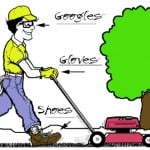
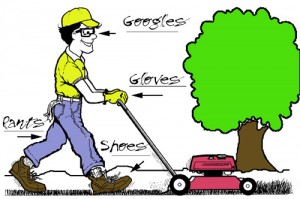 Power mowers can be dangerous and can cause serious injury if not used properly. Become familiar with the equipment, use good judgement and be safety minded. Always read the owners manual!