What are Aphids?
 Aphids are small sap-sucking insects that are highly destructive to cultivated plants in temperate regions. They range in size from 1mm to 7mm and are also known as plant lice, green-flies, black-flies, or white-flies. Despite these names there are some species of aphids which are pink, yellow or mottled in colour. In fact, there are about 4,400 species known of in the Aphididae family, and more than 500 of these species are in Britain. Some of these species will only attack will only feed from a specific one or two plant types, however others will attack a wide range of plant hosts and can be an extreme annoyance for gardeners.
Symptoms of Aphids
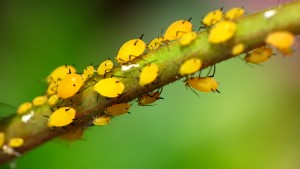 The signs and symptoms of aphids include the following:
- Honeydew is left on leaves and fruit, with black sooty mould fungus
- You can usually see aphid infestations with the human eye, and they tend to migrate towards shoot tips, flower buds, and the underneath of newer leaves.
- Premature death and yellowing of leaves and young plants
- Wilting and distortion of young shoots and leaves
- White cast skins of aphids can accumulate on the upper surface of leaves
- Symptoms of virus disease
- Colonies of aphids clustered on young stems, leaves and buds
- Stunted growth and curled or distorted leaves, weakening the plant

Controlling Aphids
Once you have found a plant that is heavily ridden with aphids, either pick them off or wipe them off with a cloth. It is then advisable to cut off the whole damaged section of the plant with a simple pair of pruners, and destroy the whole colony. Then it is ultra important to hose down the plants with cold water, ensuring you reach the underneath of the leaves. It’s important to do this every couple of days to wash off any aphid residue.
Next, spray the infected plants with a basic hand sprayer in the mornings before the sun is too strong and when there is no sign of rain. A great solution to use is 8 cups of water, with half a cup of vegetable oil, with 6-8 drops of soap, and a tiny pinch of cayenne pepper. If shaken well, and used weekly on infected plants then this solution can work wonders.
Another spray solution could be a quarter of a cup of chopped ginger with one full cup of warm water. After letting it soak for two hours, shake it well and spray all over the plants.
 Ladybirds, lacewings, and parasitic wasps all feed on aphids, so it is vital to encourage these types of pests. They will appear in more of a full force during aphid infestation periods anyway, and do help to control the aphid population, however they will not entirely eliminate aphids.
Plants such as carrots, marigolds, dill, mustard, chives, and alyssum all attract ladybirds. Planting ginger can be quite useful as aphids hate the smell which a ginger plant secretes. Garlic also works very well for this.
Many people would choose to us a commercial chemical insecticide as a form of controlling aphids, however you must take care if this is your chosen method, as they can be harmful to you, to children, and to animals.
These are just a few ways of controlling aphids in your garden! Can you think of any idea that we haven’t mentioned that work wonders for controlling these sap-sucking pests?
If you’re uncertain about anything, or would like further details, then call our highly experienced sales team now on 01263 820202 for helpful, friendly advice.