The technical bit – choosing a generator
Appliance power requirements
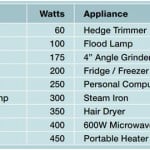
Electric appliances have different power requirements – some products such as refrigerators typically require two to five times their normal running power to start, and a circular saw requires more power when the blade is cutting – the loaded requirement.
Most electrical appliances have their power specifications on the data plate or in the owner’s manual.
Appliances without motors have a ‘resistive load’. These have a constant starting and running current. (TV’s, hi-fi’s, cookers, kettles and light bulbs fall into this category).
Items such as saws and drills are ‘reactive loads’ and while the running load may be small, the starting load should generally be calculated at up to five times running load.
Remember, after the initial start less power is required for actual operation.
Generators have a rated and maximum output capability.
Rated output is the total load allowed for continuous operation.
Maximum output is the maximum load for up to 20 minutes.
Power management
Simple power management will allow a smaller generator to do a big job. Usually not all tools or appliances are operating simultaneously. When calculating power requirements, remember that starting requirements are only for the initial motor start up and then additional appliances may be operated.

If all of this information is still leaving you confused, then why not give our sister company Just Generators a call. The generator team have in-depth knowledge on the generators they sell and will be able to offer you the guidance you may need.
You can call Just Generators on 01263 820202.