
Fairy rings are one of the most common types of lawn disease found all year round, however they are most visible and obvious in the summer and drier conditions.
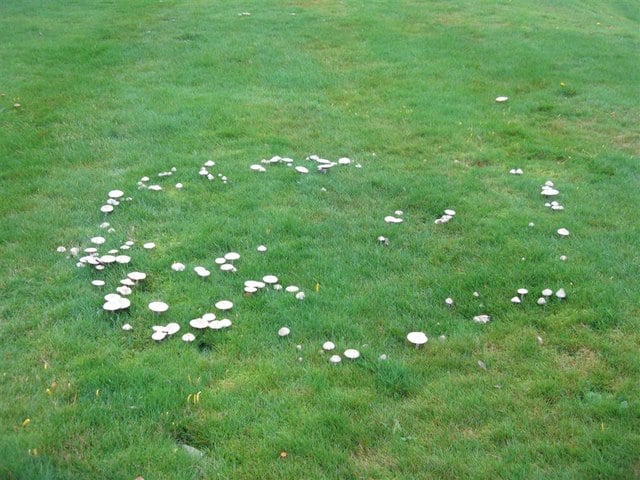 This lawn disease is mostly caused by different types of fungus, and the appearance and effects of the fairy rings will always depend on the type of fungus that initially caused the problem.
The most common problems caused are a ring of toadstools on the lawn where there is a sufficient amount of moisture, one or more rings of deep green grass, or areas of dead and yellowed grass, or bare soil patches in between the deep green rings of grass.
The most detrimental fairy rings are slow spreading colonies of the type of fungus Marasmius oreades, which stores itself in the roots of the soil and drastically changes the appearance of the grass and produces toadstools at particular times of the year, particularly in summer and autumn. This type of fungus begins by forming fungal threads in the soil. The threads that are formed are very densely packed and reach down into the soil anywhere between 20-40cm. The threads then starve the grass roots of any nutrients and water preventing a healthy growth.
Are fairy rings taking over your lawn? Well there are a few procedures you can follow in order to help eliminate them and control the probability of them ever returning.
 Unfortunately their is no fungicide (chemical control) available for the removal of fairy rings. One way to control them is by keeping the area well spiked by using a lawn aerator. It is important to spike about half a metre on either side of the ring to aid water penetration into the affected area. You could then use a wetting agent which can be purchased from most gardening stores which will break down the water repellent nature that the soil features. Then water the affected area roughly 5-10 days after you have treated it with a wetting agent. You will begin to notice when the treatment is working and you can then apply fertiliser and re-seed the area.
Another way of ridding your lawn of fairy rings is to completely dig out the affected area and replace with new soil and turf. However you will need to dig at least one meter deep which can be quite costly when it comes to replacing again.
Many people choose to turn their fairy rings into flower beds. Fungus does not like to grow into disturbed soil so will not spread into the flower bed once created.
One top tip is that when removing toadstools from the affected area, don’t put them on your compost heap. Burn them straight away to avoid spreading the fungus. This same procedure applies to grass clippings and soil as well.